
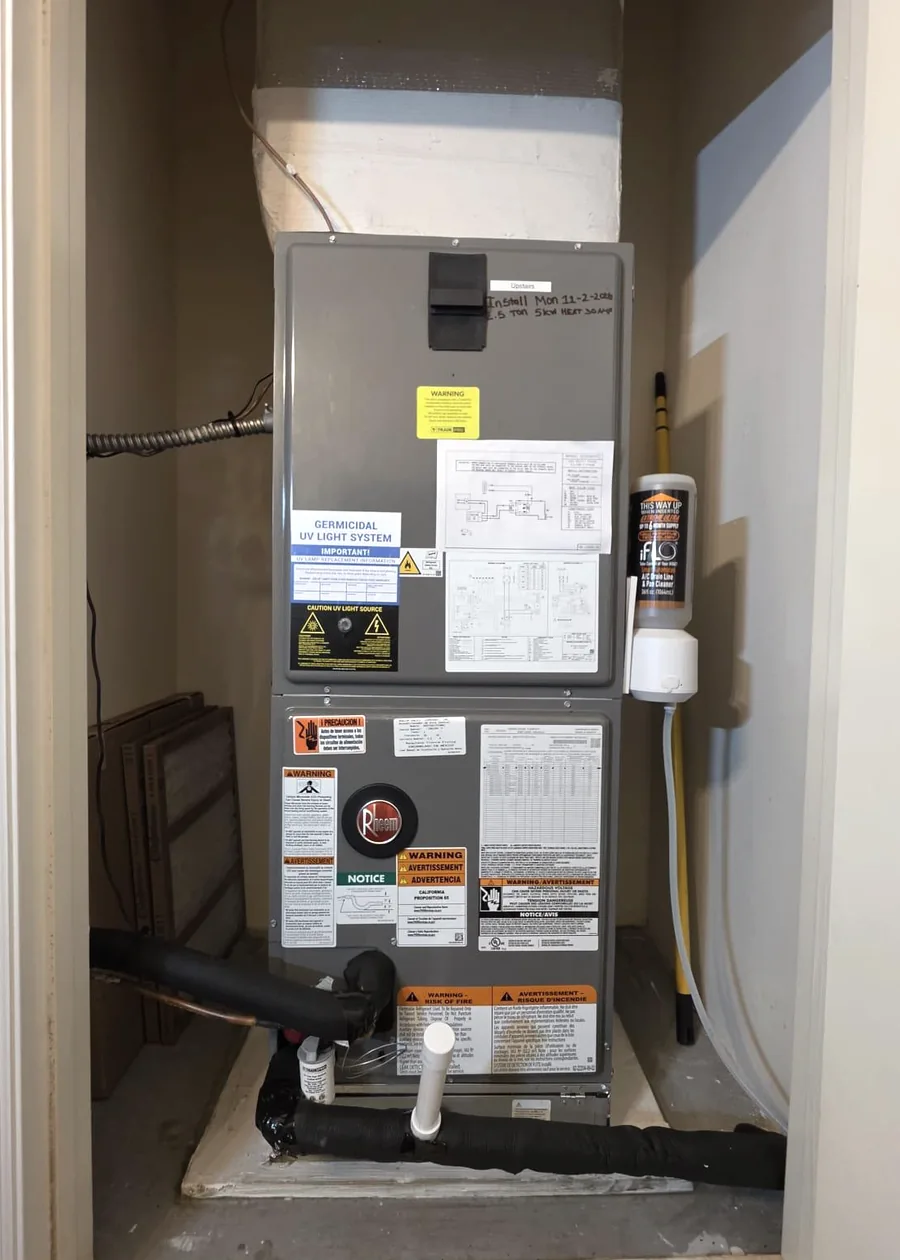
Choose the system type before the brand
- Central AC with a separate heater
- A good comparison when you have usable ducts and want to keep an existing, compatible heating system. Ask what indoor coil and blower the price assumes.
- A central heat pump
- One outdoor unit supplies cooling and heating through the ducts. Compare its cooling performance, how it handles dehumidification and what backup heat and controls the proposal includes.
- A ductless system
- Worth discussing for an addition or a room existing ducts cannot serve well. Ask how air will reach rooms behind closed doors and where condensate will drain. Compare the cost with fixing or extending the existing ducts.
If your old AC left the house clammy, say so
A larger unit can cool the air quickly and shut off before it removes enough moisture. If the thermostat read 75°F but the bedrooms felt damp, tell each bidder. Also mention rooms that stayed warm, additions, new windows and insulation changes. Those details affect the recommendation.
Ask for a cooling-load calculation, often called Manual J. It accounts for the home’s construction, windows, orientation and other heat gains. Ask how the proposed system will handle both temperature and moisture, and whether the existing return and supply ducts can deliver the required airflow. Read the University of Florida’s homeowner guide to air conditioning (PDF).
Compare two AC bids side by side
Put the two written proposals next to each other. If one price includes a new air handler, drain work and a labor warranty and the other lists only an outdoor model, ask for those missing details before comparing totals.
| Quote item | What to compare |
|---|---|
| Matched models | Full indoor and outdoor model numbers and the AHRI certificate for the proposed combination. Compare SEER2 ratings for that match. |
| Comfort controls | Single-stage, two-stage or variable-capacity operation, the compatible thermostat and how the installer will set up humidity control. |
| Installed price | Equipment removal, duct changes, drain and electrical work, permit responsibilities and the total after any eligible offers. |
| Startup checks | How the installer will verify airflow, refrigerant charge, controls and drainage, and what record you’ll receive. |
| Service and warranty | Parts and labor coverage, who handles registration, and who you call if the system stops cooling. |
Which AC brands are worth comparing?
If you’re comparing bids for Rheem, Carrier, Trane, Lennox or Goodman, ask for the model and series on each. A brand can sell several equipment types at different prices. A higher SEER2 rating describes seasonal cooling efficiency under test conditions. It doesn’t tell you whether a particular installation will solve a humid bedroom.
Ask each installer one question specific to your house. For a noisy outdoor unit beside a bedroom, request the proposed model’s published sound rating and discuss its location. For a damp house, ask how the system operates during lighter cooling loads. The most useful proposal explains what you’re paying for and which comfort problem it addresses.